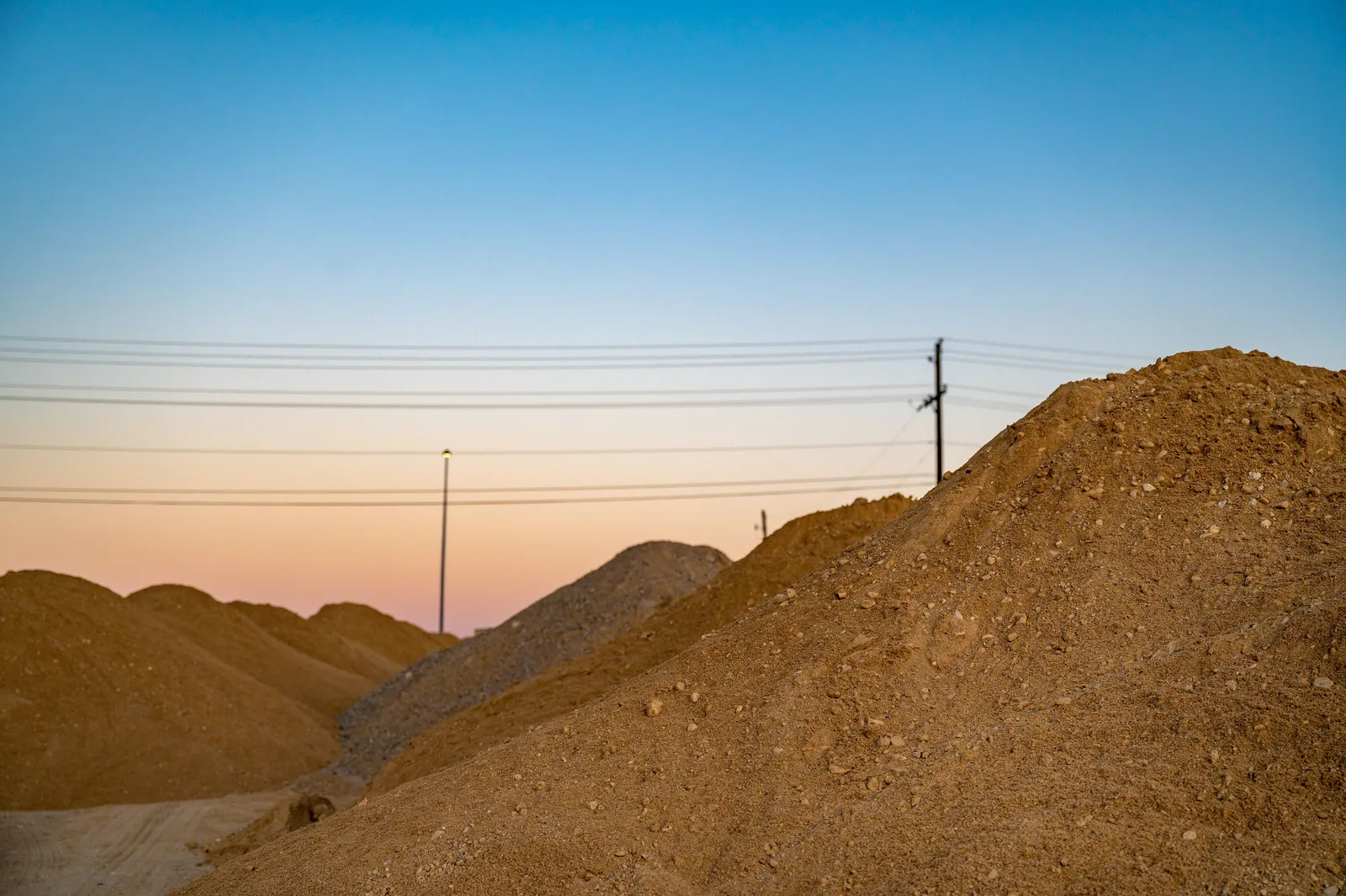
How Much Does Sand Cost in the Houston Area?
Sand costs about $15 to $40 per cubic yard as a national average, according to HomeAdvisor. Around Houston, one landscape supplier lists bank sand at $34.99 a yard before delivery. A Richmond price list starts bank sand at $70.60 a yard and lists mason and concrete sand higher. The same Houston supplier puts a truckload of sand anywhere from $200 to $850.
We sell and deliver bank sand by the truckload from our two pits in southeast Fort Bend County. Every price here is a market number from a cost guide or a supplier’s price list. Your firm number comes from your yardage and your delivery address.
What does sand cost per yard, per ton and per truckload?
Sand gets priced three ways, and the numbers do not convert one for one.
- Per cubic yard: $15 to $40, HomeAdvisor’s national average.
- Per ton: $5 to $30, from the same guide.
- Per truckload, delivered: $300 to $700 for a 10 to 14 yard load, per HomeAdvisor.
- Per truckload at one Houston landscape supplier: anywhere from $200 to $850.
Spread HomeAdvisor’s truckload price over the yards in the load, and delivered sand runs about $21 to $70 a yard. That is our arithmetic on their numbers. Before you compare two per-yard prices, ask whether the trucking is in them.
The per-ton range looks cheaper for a simple reason. A ton of sand is only about two thirds to three quarters of a yard.
Fill dirt sells in the same units. Our fill dirt cost guide for the Houston area covers those prices.
What does each type of sand cost?
Sand falls into two groups on a price list. One Houston pit supplier describes its bank sand as unprocessed and unwashed. Washed sand has the silt and clay cleaned out, and it costs more on both local lists we checked.
| Sand type | What it is used for | Published price |
|---|---|---|
| Bank sand, unwashed | Bedding water lines; final grade before sod or concrete | $34.99 a yard before delivery at one Houston supplier; from $70.60 a yard on a Richmond list |
| Fill sand, also called cushion sand | Pipe bedding and a cushion under concrete slabs | From $63.44 a ton on the Richmond list, which sells its fill sand as a sand, dirt and rock mix |
| Masonry or mason sand, washed | Mortar and brick work | $49.99 a yard before delivery at one Houston supplier; from $83.60 a yard on the Richmond list |
| Concrete sand, washed | Concrete work that needs clean sand | From $91.73 a yard on the Richmond list |
On the Richmond list, mason sand runs $13 a yard over bank sand. Concrete sand runs about $21 over. At the Houston landscape supplier, the washed mason sand is double screened as well.
Our pits produce bank sand, and we do not sell washed masonry or concrete sand. The washed rows are there for comparison.
Names shift from supplier to supplier. One guide to Texas fill materials says cushion sand is sometimes called fill sand. The Richmond list sells a fill sand it describes as a mix of sand, dirt and rock. Before you compare two quotes, ask each supplier what is in the sand.
If your plans name cushion sand or a sand spec, read that line to the supplier before the first load. Our guide on how bank sand compares with select fill and topsoil covers the other pit materials.
Which sand should you pay for?
Match the sand to the job before you compare prices. One Houston pit supplier says its bank sand gets ordered for bedding water lines. Buyers also order it as final grade, to smooth rough ground before sod or concrete.
Cushion sand is the name you will hear on slab and utility work. The same Texas fill guide calls it a gritty sand used as fill and as bedding for utility pipes. It also goes under concrete slabs to stop them from breaking.
Washed sand earns its price in mortar and concrete work. Paying washed-sand prices to fill a low spot buys cleaning the job does not use.
Is sand cheaper at the pit or delivered?
Supplier prices can leave the truck out. One Houston landscape supplier states that delivery is not included in its price. Picking up skips the delivery charge, as long as you have trucks that can haul it.
Contractors and haulers with their own trucks can load at our sand and dirt pits. Our excavators load the trucks, and a load ticket is written at the pit for each load. One of our pits holds a deep reserve of sand for volume orders.
If you do not run trucks, we deliver on our own fleet of tandem dump trucks. Our sand sells by the truckload, and big jobs run hundreds of loads. On volume jobs, we run around the clock.
What moves the price of a load of sand?
Haul distance is a big one. HomeAdvisor notes that larger trucks and longer distances raise delivery costs, and so do remote or hard-to-reach sites. Our pits sit in southeast Fort Bend County, so hauls to Needville, Guy, Rosharon, Damon and Richmond stay short.
Sand is heavy. A Texas supplier’s chart puts sand at 2,600 to 3,000 pounds a yard, against 2,300 to 2,700 for fill dirt. Trucks often reach their legal weight before the bed looks full. Wet sand weighs more still, so rain can cut the yards in each load.
Truck type counts too. The same chart puts a tandem dump truck at about 12 yards and an end dump semi at about 18. More yards per trip can mean less freight on each yard, when the site has room for a semi. Our guide to how many yards fit in each truck type runs the numbers.
How do you convert sand from tons to yards?
A cubic yard of sand weighs about 1.3 to 1.5 tons, by that same chart. To turn a per-ton price into a per-yard price, multiply by 1.3 to 1.5. At $20 a ton, that is about $26 to $30 a yard. The $20 is only an example.
Going the other way, 10 tons of sand is about 6.7 to 7.7 yards. Even one list can mix units. The Richmond list prices bank sand by the yard and fill sand at $63.44 a ton. When one supplier quotes by the ton and another by the yard, convert before you compare.
How much sand does your job need?
Length times width times depth, all in feet, divided by 27, gives cubic yards. One cubic yard spread 2 inches deep covers about 162 square feet. At 4 inches it covers about 81.
Say a 40 by 60 foot area needs 4 inches of sand. That takes about 30 yards, or three tandem loads at about 12 yards a load.
Two inches of sand over one acre takes about 269 yards. At about 12 yards to a tandem bed, that is 23 loads. Heavy or wet sand can reach the truck’s legal weight first, which adds loads. Order a little extra, because sand settles when it is rolled.
How do you get a firm price on a load of sand?
Give the supplier four things: sand type, yards or loads, delivery address, and who hauls it. With those four, a supplier can price the job.
We load your trucks at our pits, or we deliver on our tandem trucks. We haul across southeast Fort Bend County and the country southwest of Houston. Call (281) 750-6510 with the yardage and the address, and we will price the loads.