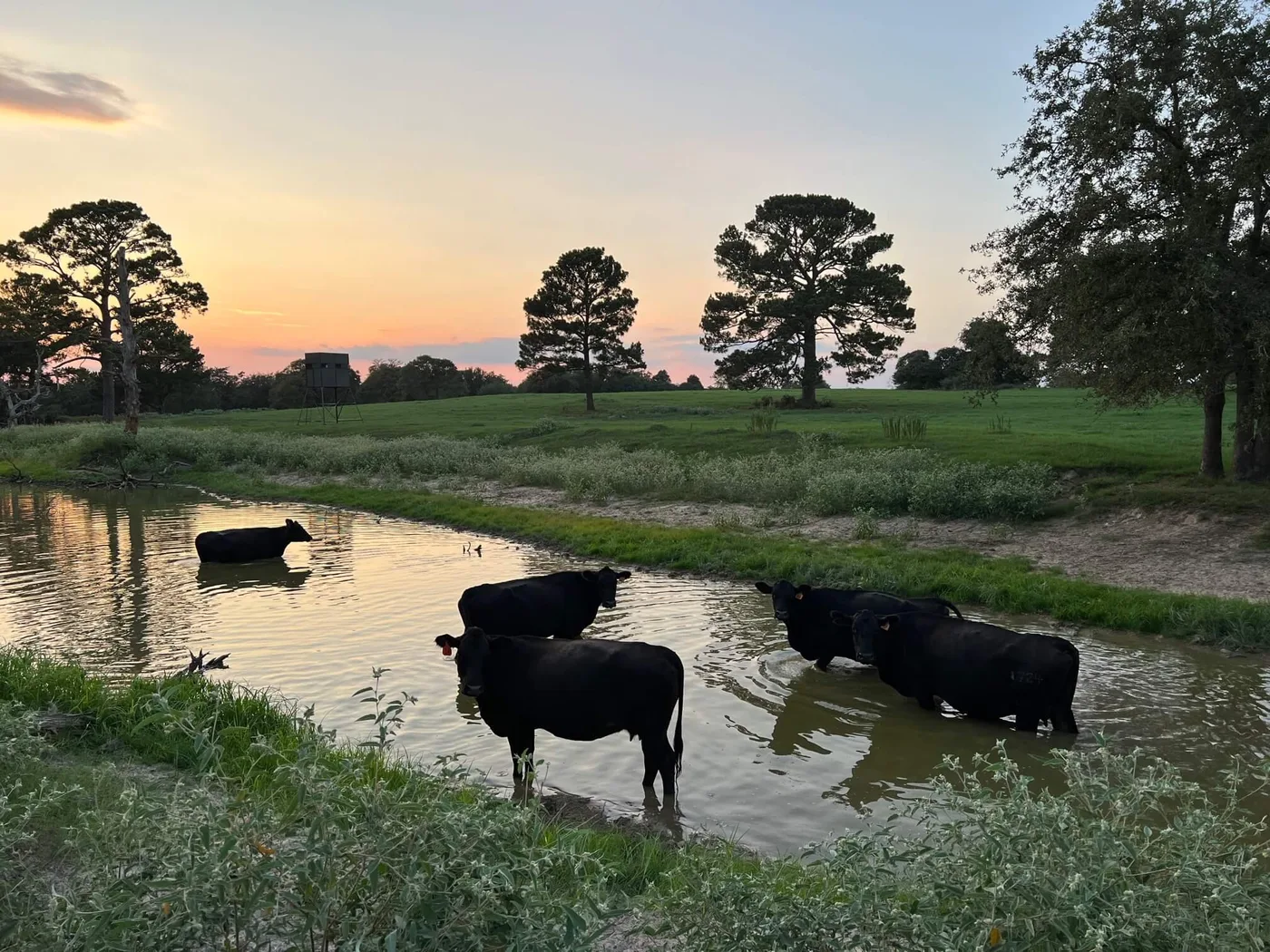
Do You Need a Permit to Build a Pond in Texas?
For most ranch ponds in Texas, no state permit is needed. The exact rule: Texas Water Code section 11.142 lets a landowner build a dam or reservoir holding up to 200 acre-feet of normal storage, on their own property, for domestic and livestock purposes, without a water-right permit, and the exemption does not apply to commercial operations. Almost every pond we dig at our pond and lake construction service fits inside that sentence with room to spare.
The details matter, though, because the exemption has conditions, dam safety is a separate body of law, and counties add their own wrinkle. Here is what the actual statutes say. This is an explanation of the law, not legal advice; the permitting call on any specific project belongs to you, your engineer and the agencies.
Why would a pond on private land need permission at all?
Because the water is not yours by default. Texas Water Code section 11.021 declares that storm water, floodwater and rainwater “of every river, natural stream, canyon, ravine, depression, and watershed in the state is the property of the state.” Every depression and watershed. A pasture pond catching plain runoff is capturing state water, which is why the law had to create an exemption for it.
The 200 acre-foot exemption, all four conditions
Section 11.142(a) grants the exemption when all of the following hold:
| Condition | What it means in practice |
|---|---|
| On the person’s own property | Your land, your pond |
| Normal storage of 200 acre-feet or less | Enormous by ranch standards; a 1-acre pond at 8 feet average depth stores about 8 acre-feet |
| For domestic and livestock purposes | Household use and watering stock |
| Not a commercial operation | Selling the water or running it as a business breaks the exemption |
A 2009 amendment even covers temporary spikes: storage can exceed 200 acre-feet briefly if the 12-month average stays at or under the line. SEO articles routinely quote the 200 number and drop the conditions. The conditions are the rule.
Fishing ponds get their own subsection, 11.142(b), and here the code is genuinely odd: it prints two versions of that subsection from two different 2001 legislative acts. One ties the fish-and-wildlife exemption to qualified open-space agricultural land, the other to unincorporated areas and wildlife management, excluding fish farming. Either way, an ordinary private fishing pond at ranch scale is covered ground; a commercial fish operation is not.
The trap: the exemption follows the use, not just the pond
Section 11.143 is the part landowners miss. Build a perfectly exempt stock pond, then start pumping it onto a hay crop, and you have left the exemption: the statute requires the owner of an exempt pond “who desires to use water from the dam or reservoir for a purpose not described by that subsection” to obtain a permit for that use. Same pond, new paperwork, because the use changed.
Dam safety is a separate rulebook
Being exempt from water-rights permitting does not exempt a dam from dam safety. TCEQ’s dam safety chapter, 30 TAC section 299.1, applies to dams over certain size thresholds, such as more than 6 feet of height with 50 or more acre-feet of capacity, and to any high or significant hazard dam over 6 feet regardless of storage. Subsection (d) says it plainly: the chapter’s requirements reach “dams that do not require a water right permit.”
There is a private-pond carve-out, and it also has conditions: private property, under 500 acre-feet, low or significant hazard class, outside city limits, and located in a county with fewer than 350,000 people. That last condition is the interesting one locally. By the 2020 census, Fort Bend County is far past 350,000 and Brazoria County is past it too, while Wharton and Matagorda Counties sit far below the line, so the same dam can be treated differently on one side of a county line than the other.
Now the practical relief: around here this rarely bites. On flat Gulf Coast prairie, most ponds are dug pits with little or no dam standing above grade, which is a different animal from a 20-foot Hill Country dam across a draw. If a design does involve real dam height, that is when engineering enters the budget, which we flag in our pond cost guide.
The county layer: dirt, not water
One more rulebook touches pond projects in our home county, and it is about dirt movement rather than water. In unincorporated Fort Bend County, the county’s floodplain regulations require an engineer-prepared drainage plan once a project outside the mapped flood zone places more than 500 cubic yards of fill per acre, along with fill setbacks from property lines and slope limits on excavations. A pond dig that spreads its spoil on site can cross that threshold quietly. In mapped flood zones, any fill needs a county permit first, and fill and elevation rules stack on top.
None of this stops a pond. It just rewards doing the dirt plan before the digging.
What this means for your pond
An ordinary stock tank or recreational pond on private ranch land southwest of Houston generally needs no state water-right permit, and most dug ponds never touch dam safety jurisdiction either. The questions worth asking before machines roll: how big, what use, how much dam height, where does the spoil go, and does the county want a drainage plan for the fill.
We build ponds inside these rules constantly. Call (281) 750-6510, tell us what you want the water to do, and we will look at the site and lay out the pond, the dirt plan and the dig.